

Board-to-board connectors, whose basic concept is to connect different circuit boards together, is currently the strongest transmission capacity of all connector types connector products, mainly used in power systems, communication networks, financial manufacturing, elevators, industrial automation, medical equipment, office equipment, home appliances, military manufacturing and other industries.
Currently the main pitch of the board-to-board connectors are 0.50 mm, 0.60 mm, 0.80 mm, 1.00 mm, 1.25 mm, 1.50 mm, 2.00 mm, 2.50 mm, 2.54 mm and 3.96 mm
2. Classification and characteristics of board-to-board connectors
Board-to-board connectors are classified into different types according to the way the boards are connected to each other, and each type has its own characteristics. The following will introduce you to this aspect one by one:
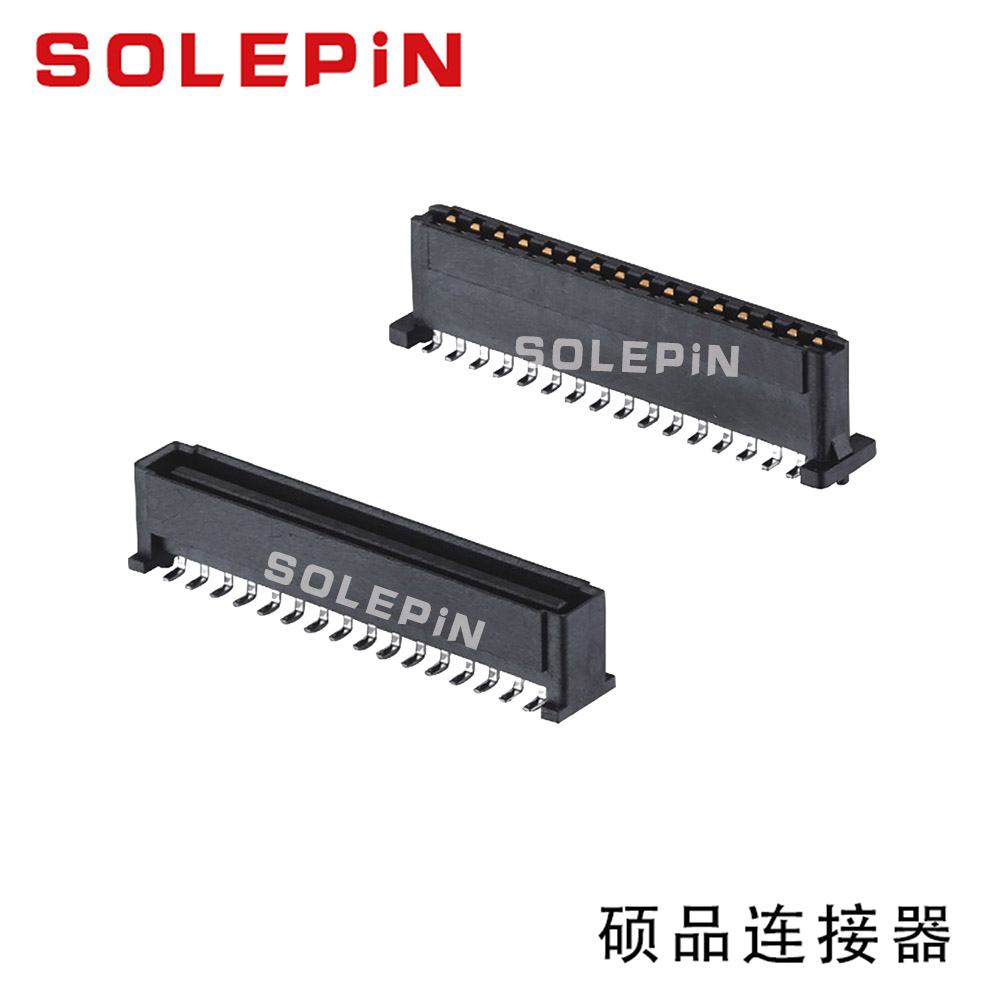
Pins and pins, also called pins and pins, are the cheapest and most common connection.
Application scenario:Low-end, large-size smart devices, development boards, debug boards, etc.
Advantages:Cheap, convenient, solid hard connection, strong over-current capability, easy soldering and testing.
Disadvantages:Large size, not easy to bend, large spacing, difficult to connect hundreds of pins (too large).
Second, high-end board-to-board plug.
More dense than the row of pins, widely used in compact products.
Application scenario:Basic use of conventional smart hardware products, widely used.
Advantages: the number of pins, small size, 1cm length can do 40 pins (the same size can only do less than 20 pins).
Disadvantages: expensive, can not be frequently plugged, the structure design needs to be fixed.
Third, thickened board-to-board connectors
Board-to-board, board-to-wire, removable, combined, pin row.
Use scenario: development boards, test boards, bulky fixed devices (such as computer chassis wiring)
Pros:Cheap, common, used with row of pins, very easy to connect and measure.
Disadvantages: large size, not easy to fix, not suitable for mass production scenarios.
Fourth, the FPC connector plug / ZIF connector
Many smart hardware devices need to remove the signal from the motherboard. fpc is the best choice because it is flexible, small size and versatile shape.
Use scenario:motherboard and daughter board connection, motherboard and peripheral connection, need to bend the wiring, compact product space.
Advantages:Small and cheap.
3. What are the board-to-board connector manufacturers?
At present, the world's top board-to-board connector manufacturers are Tyco Electronics, Molex, United Technologies, Amphenol, FCI and JAE. as for the United Technologies (HR Canda) sales model, mainly mainland China domestic agent sales. At present, their agent in mainland China is mainly Jianya Electronics.
4. How to choose board-to-board connectors?
It is very important for users to choose the right board-to-board connector products. So, how to choose a board-to-board connector, what are the selection criteria?
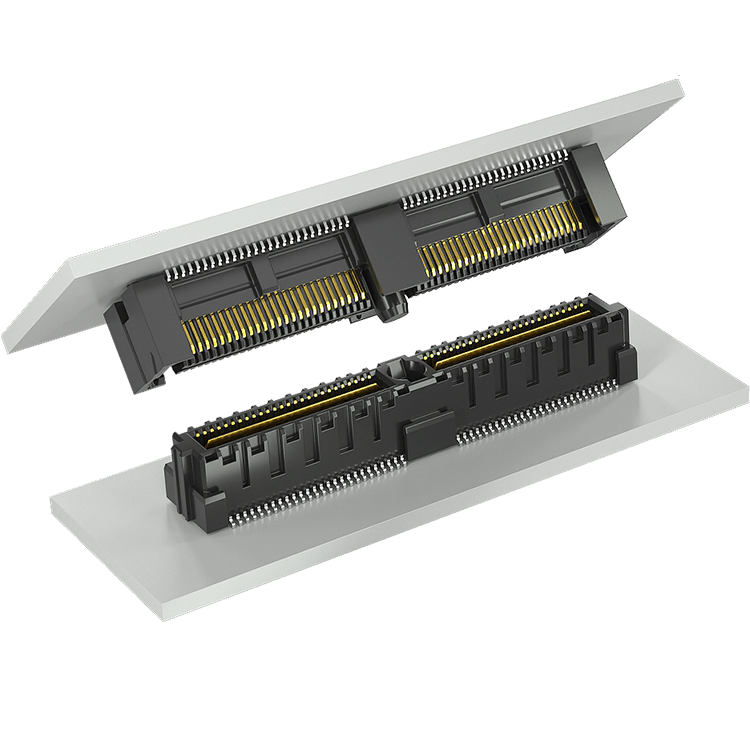
In recent years, board-to-board connectors are moving toward a smaller trend. The most common board-to-board connector pitch for handheld consumer electronic devices is 0.40 mm while 1.00 mm stacking height is small connectors. Recently major OEMs are using connectors as low as 0.70 mm and sometimes even lower. A few years ago, the old miniature connectors with widths over 4.00 mm were replaced by connectors with widths of 3.40 mm, and now the "narrow body" board-to-board concept is usually in the range of 2.40 to 2.60 mm, board-to-board products, is really the smaller the better? When buying board-to-board connectors, in addition to the basic issues of circuit size, stacking height and width, there are several things to consider:
Is smaller really better? If you're willing to accept a smaller vacuum port pickup area, you're probably right. Before choosing an ultra-small connector, you should check that the connector has all the other attributes you need and test it carefully to make sure it is rugged enough to last.
Then, choosing a socket with a top-mounted connector seems necessary, as this setup allows you to run a trace under the socket, which may be easier with a conformal coating. Some disadvantages of top sockets are that the width of the vacuum pickup area tends to be narrower, there is no plastic housing material above the socket terminals to prevent them from rising due to rough disconnects, and the more uneven top surface of the socket may cause problems for the operator in connection operations.
These new connectors with more disconnecting power sound great! Yes, but you may need to tolerate additional connector length in order to achieve the locking functionality required by these connectors; greater break strength usually means greater bond strength, which may also create problems for larger circuit sizes.
5. Board-to-board connector testing and inspection methods
A. Testing and inspection of board-to-board connectors:
1) Note that the load voltage on the board-to-board connector should not exceed 50% of its rated voltage.
2) The mounting dimensions of the board-to-board connector used to insert the connector, the length of the solder pins on the welded PCB should be greater than 0.5 mm
3) For higher precision board-to-board connectors, try to choose a slightly positioned model for manual welding when PCB space allows.
4)Check if there is a dummy-proof design.
5)Check if the material used in the board-to-board connector contains lead.
6)For small size board-to-board connectors with low contact pressure and low current voltage, it is recommended to use gold-plated or silver-plated connectors to avoid the influence of film resistance.
7) Pay attention to observe whether the height of the board-to-board connector after docking is in line with the soldering height of the components around the PCB. The assembly height must be greater than the soldering height of the components around the PCB, and there should be a margin to ensure non-interference. In particular, the height of the components may be in error after PCB welding.
6. Board-to-board connection problems and common troubleshooting
Correctly connected board-to-board connector products can extend the life of the product to ensure good operation of mechanical equipment. Failure of the board product, not timely processing, will bring immeasurable economic losses. The following is a brief description of the board-to-board connector circuit connection and troubleshooting methods.
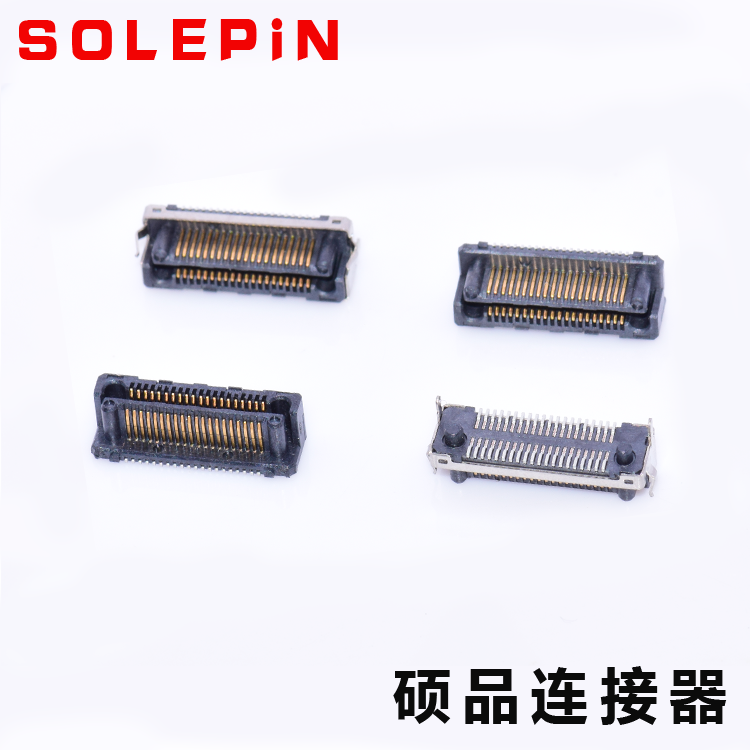
1) The connection of the board-to-board connector
2) Board-to-board connector troubleshooting
Once the product fails, the cause can be judged to be a broken wire in use and a loose product. The middle of the broken wire is not very often, mostly at the connector. So the focus of the inspection should be placed on the sensor and the wire at the connection to see if there is a loose, poor contact and other problems. General poor contact caused by open circuit failure, mostly due to product end corrosion, external dirt into the terminal or connection socket, resulting in reduced contact pressure. To deal with this kind of failure, the connector needs to be removed and then reinserted to change its connection state to restore normal contact.